This guide covers a curated list of the top 10 US industrial instrument enclosure manufacturers, what sets each apart, and what procurement and engineering teams should look for when evaluating suppliers.
Key Takeaways
- Industrial instrument enclosures protect field instruments from environmental, chemical, and temperature hazards in process industries
- Choosing the right enclosure means matching NEMA/IP ratings, material compatibility, hazardous area certifications, and heating requirements to your site conditions
- This list covers manufacturers across steel and fiberglass enclosures, modular retrofittable systems, and integrated heated designs — so you can compare by application fit
- Terrapin Industrial stands out for its patented modular design that allows enclosure installation without taking instruments offline
- Each manufacturer entry highlights key strengths, certifications, and best-fit use cases to help you shortlist faster
What Are Industrial Instrument Enclosures and Why Do They Matter?
Industrial instrument enclosures are protective housings—typically made from steel, stainless steel, fiberglass, or polycarbonate—designed to shield field instruments such as pressure transmitters, flow meters, temperature sensors, and analyzers from environmental hazards including moisture, dust, corrosive gases, and extreme temperatures.
In US process industries, instrument failure translates directly to production losses, safety risks, and regulatory exposure. Oil refineries, chemical plants, offshore platforms, and power generation facilities all depend on reliable enclosures to keep field instruments operational.
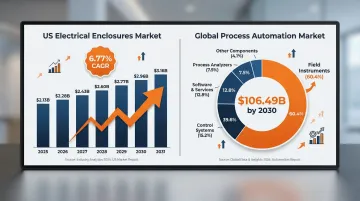
The US electrical enclosures market reflects this demand—projected to grow from $2.13 billion in 2025 to $3.16 billion by 2031 at a CAGR of 6.77%, driven by increasing energy consumption and automation across energy-intensive industries.
The global process automation and instrumentation market is projected to reach $106.49 billion by 2030, with field instruments accounting for 60.4% of market share in 2024. Growth in LNG terminals and petrochemical facilities along the US Gulf Coast is accelerating demand for enclosures rated for the harshest operating conditions.
Key environments driving that demand include:
- Upstream and downstream oil and gas facilities
- Chemical and petrochemical processing plants
- Offshore and marine platforms
- Power generation and utility infrastructure
- Mining and metals operations
The manufacturers listed below were evaluated on technical capability, certifications, product range, and proven performance in demanding process environments.
Top 10 Industrial Instrument Enclosure Manufacturers in the USA
These manufacturers were selected based on product breadth, protection standards compliance, industry certifications, customer presence in process industries, and innovation in enclosure design.
Terrapin Industrial
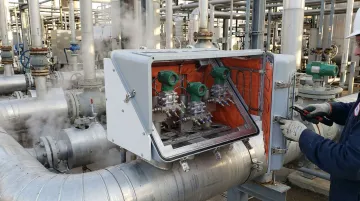
Terrapin Industrial is a Texas-based manufacturer (Richwood, TX) founded by process industry veterans who recognized the operational inefficiencies of traditional rigid enclosure installations—particularly the need to take instruments offline and source fully pre-integrated assemblies from offsite facilities. The company's patented ThermaGuard modular design directly addresses these pain points.
Terrapin's enclosures install piecemeal around live instruments without shutting them down—no offline time, no offsite integration delays. The patent-pending heated liner replaces finned heaters and rigid conduit, opening up the interior and delivering a 60% faster install with 30% lower total cost compared to traditional methods.
| Category | Details |
|---|---|
| Key Enclosure Products | Retrofittable modular instrument enclosures, expandable instrument enclosures, ThermaGuard heated liner system |
| Standards & Certifications | IP 66 (Retrofittable), IP 65 (Expandable), T6 hazardous area rated heated liner; maintains >75°F interior in -60°F environments |
| Best Suited For | Oil & gas, petrochemical, power generation, and cold-climate process facilities requiring live-instrument installation, replacement, or winterization without downtime |
nVent Hoffman
nVent Hoffman is one of the most established names in industrial enclosures, headquartered in Minnesota with over a century of operation. Their broad catalog covers wall-mounted, floor-standing, pipe-mounted, and modular enclosure systems used across energy, automation, and telecommunications industries, with over 16,000 standard products available.
The depth of their compliance portfolio—UL, CE, IEC, NEMA 4X, IP66—combined with that catalog volume means most standard instrument housing requirements can be filled without custom orders or extended lead times.
| Category | Details |
|---|---|
| Key Enclosure Products | Pipe-mounted instrument enclosures, wall-mounted enclosures, junction boxes, modular systems |
| Standards & Certifications | UL, CE, IEC, NEMA 4X, IP66 |
| Best Suited For | Large-scale industrial facilities requiring standardized enclosure solutions with broad catalog availability |
Bison ProFab
Bison ProFab is a Texas-based (Magnolia, TX) custom enclosure manufacturer specializing in steel, stainless steel, and aluminum NEMA-rated enclosures, with an emphasis on competitive pricing and fast turnaround for energy and industrial customers. The company states that 95% of their work is custom, reflecting their focus on tailored solutions.
Their ability to produce ATEX and IECEx-certified enclosures—including Class 1 Division 1 and Class 1 Division 2 models—with short lead times makes them well-positioned for Gulf Coast oil and gas projects that need locally sourced, custom-dimensioned instrument housings.
| Category | Details |
|---|---|
| Key Enclosure Products | Custom steel, stainless steel, and aluminum NEMA enclosures |
| Standards & Certifications | NEMA (Types 1, 3R, 4, 4X, 12), UL, ATEX, IECEx |
| Best Suited For | Projects requiring custom-dimensioned enclosures with rapid turnaround in the energy sector |
Saginaw Control & Engineering
Saginaw Control & Engineering is a Michigan-based manufacturer with over 60 years of experience producing standard and custom steel and fiberglass enclosures, serving electrical, HVAC, telecommunications, and industrial automation sectors. Founded in 1963, the company has established a reputation for consistent quality and customization capability.
Their Customized Standard Enclosures (CSE) program is the practical differentiator here—it delivers faster turnaround on modified standard products without the cost of fully custom fabrication. Material options span carbon steel, galvanized steel, 304/316 stainless steel, and fiberglass, covering most NEMA compliance requirements (Types 1, 3R, 4, 4X, 12, and 13).
| Category | Details |
|---|---|
| Key Enclosure Products | Steel and fiberglass instrument enclosures, wall-mounted and freestanding configurations |
| Standards & Certifications | NEMA 1, 3R, 4, 4X, 12, 13; UL listed |
| Best Suited For | Industrial facilities requiring NEMA-compliant custom enclosures with reliable domestic supply |
Stahlin Enclosures (Robroy Industries)
Stahlin Enclosures, a division of Robroy Industries based in Belding, Michigan, is a leading US manufacturer of non-metallic (fiberglass and PVC) instrument enclosures. Founded in 1935, Stahlin pioneered the first fiberglass electrical enclosure in the 1950s and excels in corrosive and chemical environments where steel would be unsuitable.
Fiberglass construction delivers inherent corrosion resistance without coatings—a meaningful advantage over coated steel in chemical and wastewater service. The patented SolarGuard composite adds UV resistance for outdoor and offshore exposure, with compliance across NEMA 4X, 6P, IP66, IP68, UL 508A, and cULus standards.
| Category | Details |
|---|---|
| Key Enclosure Products | Fiberglass (FRP) instrument enclosures, junction boxes, pull boxes |
| Standards & Certifications | UL listed, NEMA 4X, 6, 12; IP66, IP68 |
| Best Suited For | Corrosive and chemical environments where non-metallic enclosures are required |
Allied Moulded Products
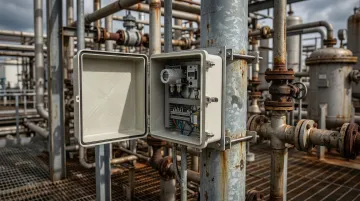
Allied Moulded Products, headquartered in Bryan, Ohio (founded 1958), is a specialist in non-metallic enclosures made from fiberglass-reinforced polyester (FRP) and polycarbonate, serving electrical and industrial instrumentation applications across North America.
The practical advantage is weight—FRP and polycarbonate housings rated to NEMA 4X and 6P are significantly lighter than metal, simplifying field installation. Polycarbonate lines (POLYLINE, ULTRALINE, ULTRAGUARD) carry UL 50, UL 50E, and UL 508A listings and cover a broad range of standard sizes for outdoor and coastal instrument installations.
| Category | Details |
|---|---|
| Key Enclosure Products | FRP and polycarbonate instrument enclosures, junction boxes |
| Standards & Certifications | NEMA 4X, 6P; UL listed |
| Best Suited For | Outdoor and coastal instrument installations requiring lightweight, corrosion-resistant housings |
Schaefer's Electrical Enclosures
Schaefer's Electrical Enclosures (Scott City, Missouri) is one of the longest-standing US enclosure manufacturers with over 50 years of operation, producing NEMA- and UL-compliant enclosures across a wide range of configurations including wall, floor, freestanding, and pushbutton enclosures.
Deep customization in stainless, galvanized steel, and aluminum is paired with an integrated thermal management lineup—heaters, cooling units, filters, and fans—covering NEMA 3R, 4, 4X, and 12 rated configurations. This makes Schaefer's a practical single-source option when enclosures require both custom dimensions and internal climate control.
| Category | Details |
|---|---|
| Key Enclosure Products | Wall and freestanding enclosures, operator system enclosures, custom instrument housings |
| Standards & Certifications | NEMA compliant, UL recognized |
| Best Suited For | Industrial facilities requiring heavily customized enclosures with integrated thermal management |
Hammond Manufacturing
Hammond Manufacturing is a century-old North American enclosure manufacturer (founded 1917) with significant US market presence, producing electrical enclosures, rack systems, and power distribution units for electronics, electrical, and data communications industries.
Broad material coverage—steel, aluminum, stainless, and polycarbonate—with consistent NEMA and IP ratings across all lines means buyers can source diverse enclosure types from a single supplier. The 1555F Series polycarbonate line is UL 508A listed and meets IP68 and NEMA Type 4, 4X, 6, 6P, 12 & 13 standards for harsh outdoor or industrial service.
| Category | Details |
|---|---|
| Key Enclosure Products | Steel, aluminum, stainless, and polycarbonate instrument enclosures; junction boxes; rack enclosures |
| Standards & Certifications | NEMA 1, 4, 4X, 12; IP ratings including IP68 |
| Best Suited For | Facilities requiring a wide material and size selection from a single, established supplier |
Integra Enclosures
Integra Enclosures (Mentor, Ohio, founded 1977) is a US manufacturer focused on polycarbonate and stainless steel enclosures, serving industrial and commercial applications with a particular emphasis on transparent-lid and high-visibility enclosure formats.
The clear-cover polycarbonate models (H8084HCF, H6064HC) let technicians inspect enclosed instruments without breaking the seal—useful in pharmaceutical or food-grade environments where access frequency drives contamination risk. Products are UL/c-UL Listed and certified to NEMA 4X, 6P, 12, 13, CE, IP 66/68, and ATEX/IECEx standards.
| Category | Details |
|---|---|
| Key Enclosure Products | Polycarbonate enclosures with transparent lids, stainless steel NEMA 4X enclosures |
| Standards & Certifications | NEMA 4X; UL listed; CE, IP 66/68, ATEX/IECEx |
| Best Suited For | Applications requiring visual access to instruments without housing removal; food, pharma, and chemical industries |
Pepperl+Fuchs (USA)
Pepperl+Fuchs is a globally recognized industrial automation and hazardous area equipment manufacturer with US headquarters in Twinsburg, Ohio, specifically known for instrument housings and field housings designed for use in explosive and hazardous area classifications (Zone 1, Zone 2, Division 1, Division 2).
Hazardous area specialization is where Pepperl+Fuchs stands out. The GR Series (GRP) and SR Series (Stainless Steel) carry ATEX, IECEx, and cULus certifications for Class I and II, Division 2 and Class I, Zone 2 applications—covering the classification requirements that matter most in oil refineries, gas processing plants, and chemical facilities.
| Category | Details |
|---|---|
| Key Enclosure Products | Hazardous area field housings, GRP and aluminum Ex enclosures, junction boxes for Zone 1/2 and Div. 1/2 |
| Standards & Certifications | ATEX, IECEx, NEC Division 1 & 2, cULus |
| Best Suited For | Oil & gas, refining, and chemical facilities with Zone 1/2 or Div. 1/2 hazardous area requirements |
How We Chose the Best Industrial Instrument Enclosure Manufacturers
The manufacturers on this list were assessed for their specific relevance to industrial instrument protection—not general electrical enclosures. Too many buyers select enclosures rated only for NEMA 1 or 12 service, then discover those ratings don't hold up in process environments, outdoor installations, or washdown areas where NEMA 4X or higher is required.
Thermal management is another common gap. Cold-climate installations often fail when enclosures lack heat tracing compatibility or insulation provisions.
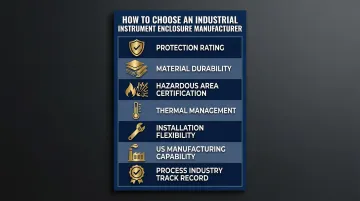
Selection factors applied:
- Protection rating: NEMA/IP compliance verified for outdoor, washdown, and chemically aggressive service conditions
- Material durability: Resistance to corrosion, chemical exposure, and UV degradation over service life
- Hazardous area certification: ATEX, IECEx, NEC Division 1/2 compliance
- Thermal management: Availability of heated enclosure options for cold-climate installations
- Installation flexibility: Modular vs. rigid designs and field installation capabilities
- US manufacturing capability: Domestic production and supply chain reliability
- Process industry track record: Proven performance in oil & gas, petrochemical, and power generation
Meeting these criteria is a baseline, not a finish line. Beyond certifications, evaluate whether a manufacturer can support custom configurations, provide technical consultation during specification, and help reduce total installation and lifecycle costs. A lower unit price rarely offsets the expense of field rework, schedule delays, or incompatible thermal management down the line.
Conclusion
The right industrial instrument enclosure manufacturer is not simply the one with the largest catalog or the lowest unit price—it is the one whose products align with the specific protection requirements, installation constraints, and lifecycle cost goals of your facility.
Evaluate each manufacturer against your actual field conditions: ambient temperature range, area classification, corrosion exposure, and whether instruments can be taken offline for enclosure work. Consider not just the initial purchase price but the total installed cost, including labor, downtime, and long-term maintenance requirements.
That last criterion — whether instruments can stay online — is where enclosure selection decisions often get made. For oil & gas, petrochemical, and power generation facilities, Terrapin Industrial's patented modular enclosures are designed specifically to install around live instruments, cutting total installation cost by 30% and eliminating the downtime associated with taking instruments offline. Contact Terrapin's team at (281) 615-1429 to discuss your specific application requirements.
Frequently Asked Questions
What is the difference between an industrial instrument enclosure and a standard electrical enclosure?
Industrial instrument enclosures are engineered for process environments — housing transmitters, sensors, and analyzers with higher IP/NEMA ratings, thermal management, and hazardous area certifications. Standard electrical enclosures (NEMA 1 or 12) protect against indoor dust and incidental contact only, without the environmental or safety features process instrumentation requires.
What NEMA or IP rating do I need for an outdoor industrial instrument enclosure?
NEMA 4X (~IP66) is the standard minimum for outdoor and washdown use, with added corrosion resistance for petrochemical and offshore environments. Applications with submersion risk or highly corrosive exposure require NEMA 6/6P (~IP67/IP68). Always confirm the rating against your site's installation conditions and applicable codes.
What materials are most commonly used in industrial instrument enclosures?
Common materials include carbon steel (general-purpose applications), stainless steel (corrosive and washdown environments), fiberglass/FRP (highly corrosive or non-conductive applications), and polycarbonate (lightweight, transparent-lid options for visual access). Material choice should align with the chemical exposure and temperature range of the installation site.
How do heated instrument enclosures protect instruments in cold climates?
Heated enclosures use heater cables, finned heaters, or heated liner systems to maintain interior temperatures above freezing, preventing fluid freeze, condensation, and component failures. Heater cable systems like those in Terrapin's ThermaGuard liner last up to 30 years — six times longer than traditional block or finned heaters.
What does it mean for an instrument enclosure to be rated for a hazardous area?
Hazardous area ratings (ATEX, IECEx, NEC Division 1/2 or Zone 1/2) certify the enclosure won't ignite surrounding flammable gases, vapors, or dust under normal or fault conditions. The required rating is determined by your facility's area classification study (HAZOP) and is mandatory for refineries, gas processing plants, and chemical facilities.
When should I choose a modular instrument enclosure over a traditional rigid one?
Choose modular when you can't take instruments offline, need staged installation, or want easier long-term access and component-level maintenance. Rigid enclosures work for straightforward new-build projects, but modular designs typically reduce total installation costs and add flexibility that rigid units can't match.