Introduction
In oil & gas, petrochemical, and process industries, a single electrical spark in a hazardous environment can trigger catastrophic failures. Choosing the right explosion-proof instrument enclosure manufacturer is a decision that directly affects worker safety and plant continuity.
The U.S. Chemical Safety and Hazard Investigation Board documented 281 combustible dust incidents between 1980 and 2005, resulting in 119 worker fatalities and 718 injuries. Those numbers make the case for properly specified explosion-proof equipment plainly.
With dozens of manufacturers offering varying levels of certification, material quality, and installation flexibility, narrowing the field takes time procurement teams rarely have. This guide covers 10 leading manufacturers alongside the key selection criteria for Class I Division 1/2, ATEX Zone 1/2, and other classified locations — so engineers can make a defensible, specification-ready choice.
Key Takeaways
- Explosion-proof enclosures are certified housings that contain internal sparks and prevent ignition in hazardous atmospheres
- Key certifications include UL/CSA (NEMA 7/9), ATEX, IECEx, and IP65/66 or higher
- Manufacturers vary by specialty: cast heavy-duty builds, modular designs, global certifications, or industry-specific configurations
- Terrapin Industrial's modular enclosures use a patented design that lets you install or swap enclosures without taking instruments offline
- Choose based on hazardous area classification, installation flexibility, and long-term install and maintenance costs
What Are Explosion-Proof Industrial Instrument Enclosures?
Explosion-proof instrument enclosures are certified housings—typically cast aluminum, cast iron, or stainless steel—designed to contain any internal ignition event and prevent it from spreading into the surrounding flammable or explosive atmosphere.
Unlike standard weatherproof or NEMA 4X enclosures, these specialized housings protect transmitters, gauges, regulators, and tubing bundles in process environments where explosive gases, vapors, or combustible dusts are present.
Protection Methods and Standards
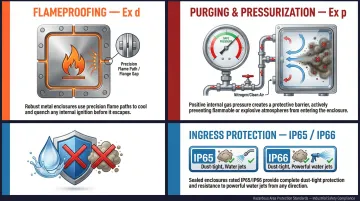
Three primary protection methods define explosion-proof enclosures:
- Flameproofing (Ex d): Enclosures withstand internal explosions and prevent flame transmission to external atmospheres through tight-tolerance flame paths that quench ignition before it exits the housing
- Purging/Pressurization (Ex p): Maintains protective gas pressure within the enclosure to prevent ingress of hazardous atmospheres
- Ingress Protection (IP ratings): IP65/IP66 ratings ensure dust-tight and water-resistant sealing
Classification Systems
Hazardous area classifications determine which enclosures are appropriate for specific installations:
NEC Class/Division System (North America):
- Class I: Flammable gases/vapors (Division 1 = normal presence, Division 2 = abnormal presence)
- Class II: Combustible dusts (Groups E, F, G)
- Class III: Ignitable fibers
IEC Zone System (Global):
- Zone 0/1/2: Gas atmospheres (continuous, likely, or unlikely presence)
- Zone 20/21/22: Dust atmospheres (continuous, likely, or unlikely presence)
NEMA Ratings:
- NEMA 7: Class I, Groups A-D (gas-rated)
- NEMA 9: Class II, Groups E-G (dust-rated)
Market Context
The global explosion-proof equipment market reached $8.64 billion in 2025 and is projected to grow to $11.28 billion by 2030, with junction boxes and enclosures representing 26.3% of the market. The dust explosion segment is growing faster than gas applications, driven by lithium-ion gigafactories and pharmaceutical powder processing facilities.
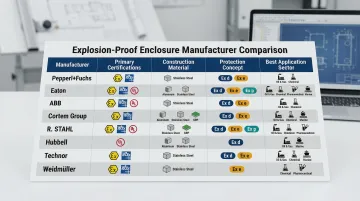
That growth puts pressure on procurement teams to vet suppliers carefully. The manufacturers below represent a cross-section of the market—from global industrial conglomerates to specialized innovators—evaluated on certification depth, product range, installation flexibility, and adoption across process industries.
Top 10 Explosion-Proof Industrial Instrument Enclosure Manufacturers
These manufacturers were evaluated on certification coverage, product range, industry adoption, design innovation, and ability to serve hazardous area requirements across oil & gas, petrochemical, power, and related sectors.
Terrapin Industrial
Terrapin Industrial is a U.S.-based manufacturer (Richwood, TX) founded by industry professionals whose field experience in oil & gas and process industries identified a critical gap: the need to replace or install instrument enclosures without taking instruments offline. This insight led to the development of their patented ThermaGuard modular enclosure system.
What Makes Terrapin Stand Out:
Terrapin's patented retrofittable design allows enclosure panels to be assembled piecemeal around an existing instrument, eliminating offsite integration and reducing total installation time and cost by 30%. A heater installs in under 2 minutes. The patent-pending heated liner carries a 30-year cable life expectancy versus 5 years for conventional finned heaters, and the system is rated IP65/IP66 for T6 hazardous areas.
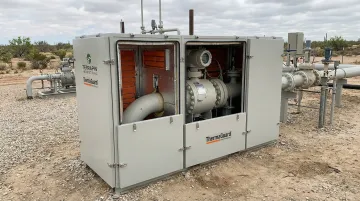
For facilities with 500+ instrument enclosures, eliminating the typical 2-3 week offsite integration schedule break translates directly to hundreds of thousands of dollars in cumulative savings.
| Feature Category | Details |
|---|---|
| Key Features | Patented modular/retrofittable design; pre-engineered wiring and tube entry holes; quick-connect pipe stand bracket; self-aligning manifold; heated liner with 30-year cable life expectancy; installs around live instruments without shutdown |
| Certifications | IP 66 (Retrofittable Enclosure), IP 65 (Expandable Enclosure); heated liner rated for T6 hazardous areas; serves U.S. and Canada |
| Best For | Oil & gas, petrochemical, power generation, marine/offshore, mining — particularly facilities needing retrofittable enclosures or winterization without instrument downtime |
Eaton (Crouse-Hinds)
Eaton's Crouse-Hinds division has manufactured hazardous location electrical equipment since 1897. Its catalog covers explosion-proof junction boxes, instrument enclosures, conduit fittings, and accessories for oil & gas, chemical, and utility markets worldwide.
Key Product Lines:
The EIH, EIHT, and GUB series are built from copper-free aluminum with Corro-free epoxy powder coat. Key design details include:
- Dual-chamber EIHT series isolates power supply from instrument components
- 3/4" offset through-feed hubs maximize usable interior space
- External bosses allow additional drilling and tapping in the field
Differentiators:
Wide NEMA 7/9 and ATEX/IECEx dual-certified product lines, cast copper-free aluminum and stainless steel construction options, and a global distribution network that supports large EPC (Engineering, Procurement & Construction) projects. Precision threaded flame paths and neoprene gaskets provide watertight seals for NEMA 4 applications.
| Feature Category | Details |
|---|---|
| Key Features | Modular dual-chamber design (EIHT series); copper-free aluminum with Corro-free epoxy coating; offset hubs for maximum interior space; wrenching lugs for easy cover removal |
| Certifications | UL 1203, CSA C22.2 No. 30; NEMA 3, 4, 4X, 7BCD, 9EFG; ATEX (KEMA 02 ATEX 2265U); IECEx compliant with EN60079-0, EN60079-1, EN60529 |
| Best For | Oil & gas, chemical processing, utilities, offshore platforms — large EPC projects requiring globally certified hardware |
Emerson (Appleton Electric)
Emerson's Appleton Electric brand is a well-established hazardous location equipment supplier with a strong North American footprint, offering explosion-proof enclosures, conduit systems, and fittings rated for Class I, II, and III locations.
Product Range:
Key series include GUBB, GUBBD, GUBBM (rated for Class I, Div 1 & 2, Groups A-D; Class II, Div 1 & 2, Groups E-G), AGUB, NGUB, and the ASSE Series stainless steel enclosures certified for ATEX and IECEx hazardous locations. Materials include copper-free aluminum (4/10 of 1% max.) and malleable iron bodies.
Differentiators:
NEC-compliant product line with UL/CSA ratings integrates directly into Emerson's broader automation and process management ecosystem. Precision threaded flame paths and O-ring gaskets seal out moisture and dust. Available through an extensive industrial distribution network.
| Feature Category | Details |
|---|---|
| Key Features | Copper-free aluminum and malleable iron construction; precision threaded flame paths; O-ring gasket sealing; stainless steel ASSE series for high corrosion resistance |
| Certifications | UL 886 (UL 1203), CSA C22.2 No. 25/30; NEMA 4, 4X, 7BCD, 9EFG; ATEX and IECEx (ASSE series) |
| Best For | North American industrial facilities, oil & gas, chemical — facilities already using Emerson automation platforms |
nVent HOFFMAN
nVent HOFFMAN is a global enclosure manufacturer with a strong presence in industrial and hazardous location applications, offering stainless steel and carbon steel enclosures that serve process control, instrumentation, and electrical distribution functions.
Product Line:
The ZonEx series includes ATEX- and IECEx-Certified enclosures available in hinged and screw cover models, constructed from Type 316 stainless steel and non-metallic compression molded fiberglass (GRP). The wide operating range extends from -55°C to +180°C with silicone gaskets.
Differentiators:
nVent HOFFMAN stands out for its integrated thermal management accessories: climate control units, heaters, coolers, and hazardous location thermostats. The SpectraCool Hazardous Location Air Conditioner is UL Classified for Class 1, Div 2, Groups A-D. Hazardous location heaters and thermostats carry ATEX/IECEx approval (Ex d IIC T5/T4/T6 Gb), and the enclosures include removable gland plates with internal/external brass earth/ground provisions.
Important Note: ZonEx enclosures are certified for increased safety (Ex e) applications, not explosion-proof or flame-proof (Ex d) applications.
| Feature Category | Details |
|---|---|
| Key Features | Type 316 stainless steel and GRP construction; removable gland plates; wide temperature range (-55°C to +180°C); integrated thermal management accessories |
| Certifications | ATEX Directive 2014/35/EU, IECEx, AEx (Ex e — increased safety); cUL Type 4, 4X, 12; IEC IP66 |
| Best For | Process instrumentation, panel building, facilities needing integrated thermal management solutions in increased safety (Ex e) applications |
Pepperl+Fuchs
Pepperl+Fuchs is a German-headquartered specialist in explosion protection and industrial sensor technology, with a dedicated portfolio of Ex-rated enclosures, junction boxes, and field housings designed specifically for instrumentation and control applications in hazardous areas.
Product Range:
The GR Series is made from glass-fiber reinforced polyester (GRP), designed for increased safety (Ex e) and intrinsic safety (Ex i) with temperature tolerance down to -60°C. The SR Series features brushed stainless steel construction offering high durability with IP66 and NEMA Type 4X ratings. Aluminum field junction boxes serve general hazardous area applications.
Differentiators:
Pepperl+Fuchs offers strong ATEX and IECEx certification depth alongside tight integration with their intrinsic safety barriers and FieldConnex® fieldbus systems. The SR series uses a modular design supporting flange plates, hinges, and mounting brackets, with a 45° return flange sealing method that channels water away from the seal.
| Feature Category | Details |
|---|---|
| Key Features | GRP material for corrosion resistance; temperature tolerance to -60°C; 45° return flange sealing; modular accessory integration; integrated cable gland systems |
| Certifications | ATEX, IECEx, NEC; Zone 1, Zone 2, Zone 21, Zone 22, Class I/II Division 2; IP66, NEMA Type 4X |
| Best For | Chemical, pharmaceutical, offshore — environments requiring lightweight, corrosion-resistant instrument enclosures with integrated intrinsic safety solutions |
R. Stahl
R. Stahl is a German manufacturer with over 100 years in explosion protection, offering a comprehensive range of Ex-certified enclosures, control stations, and instrument housings across multiple protection concepts (Ex d, Ex e, Ex p, Ex n). The company introduced the first explosion-proof remote I/O system in 1988.
Product Series:
Key series include 8265 (Threaded Enclosure), 8264 (CUBEx), 8250 (Ex d), and 8150 (Terminal Boxes), constructed from copper-free aluminum and stainless steel (AISI 304/316L). Series 8265 operates in ambient temperatures from -50°C to +50°C.
Differentiators:
R. Stahl covers all major Ex protection concepts (Ex d, Ex e, Ex p, Ex n) with dual ATEX/IECEx certification on most products, backed by custom engineering services for complex hazardous area installations. Over a century of focused work in explosion protection gives the company engineering depth that few generalist manufacturers match.
| Feature Category | Details |
|---|---|
| Key Features | Copper-free aluminum and stainless steel construction; multi-concept Ex protection (Ex d, e, p, n); custom engineering services; wide temperature range (-50°C to +50°C) |
| Certifications | ATEX (PTB 06 ATEX 1023 u), IECEx (IECEx PTB 07.0027 u), UL/cUL (E307783, E114097); NEC/CEC Class I Div 1 Groups A-D, Class II/III Div 1 Groups E-G |
| Best For | Global oil & gas, petrochemical, and offshore applications requiring multi-concept Ex protection expertise |
Adalet
Adalet, a Marmon Holdings company, has been manufacturing explosion-proof and weatherproof enclosures for nearly 100 years, maintaining a strong U.S. manufacturing base with a long track record in cast aluminum and stainless steel hazardous location products for oil & gas, chemical, and power sectors.
Product Series:
Key series include XCE (Explosionproof Control), XCEX (Flameproof Control), XJF (Junction Boxes), and XIHMK (Instrument Housing), constructed from copper-free aluminum (3/10 of 1% max.) and stainless steel (Type 304, 316).
Differentiators:
Made-in-USA manufacturing, UL/CSA-listed products across a wide NEMA 7/9 range, and custom machining capabilities for application-specific enclosure configurations. Adalet specializes in custom machining including milling, counter-boring, and blind drilled entries. Features integral cast-on mounting lugs and external flanges for accessibility.
| Feature Category | Details |
|---|---|
| Key Features | Copper-free aluminum and stainless steel options; custom machining capabilities (milling, counter-boring, blind drilling); integral cast-on mounting lugs; external flanges |
| Certifications | UL 1203, CSA C22.2 No. 30, UL 50; NEMA Type 4, 7, 9; ATEX (Epsilon 07 ATEX 2251U), IECEx (IECEx UL 10.0046U) for XCEX series |
| Best For | U.S. oil & gas, chemical, and power facilities prioritizing domestic sourcing and UL/CSA compliance |
Rittal
Rittal is a Germany-headquartered enclosure systems manufacturer with a broad product range that includes hazardous location and Ex-rated variants for process industries worldwide.
Product Lines:
AX Plastic Ex Enclosures are made from fibre-glass-reinforced unsaturated polyester, while Stainless Steel EX Enclosures are constructed from stainless steel. AX plastic enclosures feature a symmetrical layout allowing for 180° rotation and double-seal encapsulated design.
Differentiators:
Systematic enclosure platform approach with standardized dimensions, accessories, and climate control options. The 25 mm pitch pattern for interior installation ensures compatibility with Rittal system accessories. Global manufacturing footprint and engineering software tools for enclosure configuration streamline specification and procurement.
| Feature Category | Details |
|---|---|
| Key Features | Standardized platform with 25 mm pitch pattern; 180° rotational symmetry (AX plastic); double-seal encapsulated design; compatible with comprehensive accessory ecosystem |
| Certifications | ATEX, IECEx, UL HazLoc; Zones 1, 2, 21, 22 (2014/34/EU); IP 65 (AX plastic), IP 66 (stainless steel); NEMA Type 1, 3R, 3RX, 4, 4X, 12 |
| Best For | Global process and manufacturing industries seeking a standardized, accessory-rich enclosure platform |
ABB (Cortem Group)
ABB entered the explosion-proof enclosure market through its Cortem Group acquisition, adding a specialized Italian manufacturer of ATEX and IECEx-certified junction boxes, distribution boxes, and instrument enclosures to its industrial automation portfolio.
Product Range:
Series include EJB and GUB (Aluminium), EJBX and CCAI (Stainless Steel), and SA-P (Polyester), constructed from high-quality low-copper aluminum alloy, stainless steel (AISI 316L), and GRP. Silicone gaskets ensure IP66 protection, with materials selected for high corrosion resistance.
Differentiators:
Cortem's European ATEX/IECEx certification history, combined with ABB's global project and service network, makes this a strong option for international projects. The product range spans GRP, cast aluminum, and stainless steel, with protection concepts covering Ex d (flameproof), Ex e (increased safety), and Ex tb (dust protection).
| Feature Category | Details |
|---|---|
| Key Features | Low-copper aluminum alloy, stainless steel (AISI 316L), and GRP construction; silicone gasket sealing; multi-concept protection (Ex d, Ex e, Ex tb) |
| Certifications | ATEX, IECEx; Zones 1, 2, 21, 22; IP66/IP68 |
| Best For | Global oil & gas, marine/offshore, and petrochemical projects requiring ATEX/IECEx certified enclosures backed by a major automation OEM |
Ex Industries
Ex Industries is a hazardous location equipment specialist focused on globally certified explosion-proof enclosures, junction boxes, and accessories, serving industries including oil & gas, chemical processing, pharmaceutical, and power generation.
Product Range:
Offerings include Explosion-Proof Junction Boxes, Instrument Enclosures, Ex d Flameproof Housings, and Ex e Increased Safety Enclosures. Specific series include XCESX (Cast Stainless Steel) and EJB (Aluminium), with precision-engineered machined flame paths and silicone gaskets for NEMA 4X / IP66 protection.
Differentiators:
Ex Industries carries one of the broader multi-standard certification portfolios in this list: ATEX, IECEx, UL/CSA, GOST, and INMETRO. That breadth, combined with custom engineering capabilities (window doors, mounting panels, cable entry systems), makes them a practical choice for projects that span multiple regulatory jurisdictions.
| Feature Category | Details |
|---|---|
| Key Features | Cast stainless steel and aluminum construction; precision-engineered flame paths; custom configurations (window doors, mounting panels, cable entry systems) |
| Certifications | ATEX, IECEx, UL/CSA, NEC, GOST, INMETRO; Class I Division 1, Class II Division 1; NEMA 4X / IP66 |
| Best For | Multi-regional projects requiring cross-standard certification coverage in oil & gas, chemical, and pharmaceutical environments |
How We Selected These Manufacturers
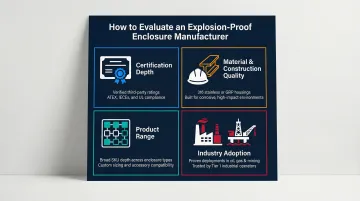
Each manufacturer on this list was evaluated across four criteria:
- Certification depth: UL/CSA, ATEX, and IECEx ratings for the specific hazardous area classifications they cover
- Material and construction quality: Cast aluminum, stainless steel, and GRP options for process environments
- Product range: Instrument-specific designs versus general electrical enclosures
- Industry adoption: Demonstrated use across oil & gas, petrochemical, and process industries
Common Procurement Mistakes
Buyers often over-focus on brand name while overlooking whether the specific product holds the required area classification rating for their facility. A common error is mismatching Division 1 vs Division 2 ratings or incorrect Group classifications. Another critical mistake is assuming NEMA 7 and ATEX certifications are interchangeable—they are not and require dual certification for cross-market use.
Installation Flexibility: The Overlooked Factor
Total installation cost and field-level flexibility are often underweighted in procurement decisions. Rigid enclosures that require instruments to be taken offline for installation or replacement drive up labor costs and introduce schedule delays.
Traditional installations can consume upwards of 20 field man-hours per transmitter, with offsite integration services running approximately $600 per unit and creating 2–3 week schedule breaks. Manufacturers offering modular or retrofittable designs address these costs directly — allowing enclosures to be installed in stages around existing instrumentation without shutdowns or offsite integration.
Total Cost of Ownership Considerations
Installation flexibility is just one piece of the TCO picture. Buyers should also assess:
- Heater element lifespan — traditional finned and block heaters typically fail within 5 years; heated liner technologies can reach 30-year service life
- Component replaceability — individually replaceable parts cut maintenance complexity and reduce unplanned downtime
- In-field maintenance capability — whether servicing requires a full process shutdown or can be done live
- Total installation labor — man-hours for complete installation, including integration and commissioning
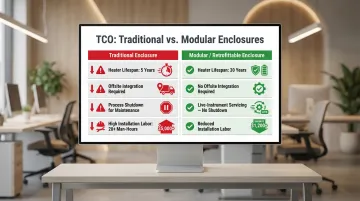
Across a typical 20–30 year service life, these factors routinely outweigh the upfront price differences between manufacturers.
Conclusion
Selecting an explosion-proof instrument enclosure manufacturer directly affects installation cost, project schedule, long-term maintenance burden, and personnel safety. The right supplier needs to align with your facility's hazardous area classification, operational requirements, and installation constraints.
Before finalizing a supplier, evaluate each manufacturer on more than certification and price. Key factors to compare:
- Installation flexibility and site adaptability
- Lead times and supply chain reliability
- Field-service support and spare parts availability
- Total cost of ownership over the enclosure lifecycle
For facilities with hundreds of instrument enclosures, these factors can add up to hundreds of thousands of dollars in savings and weeks of schedule improvement.
Terrapin Industrial offers a free consultation for oil & gas, petrochemical, power, and other process facilities evaluating enclosure systems. Their modular, retrofittable design is built to reduce installation time, keep instruments online during replacement, and lower total project cost. Call (281)-615-1429 or visit their site to learn more.
Frequently Asked Questions
What certifications should I look for in an explosion-proof instrument enclosure?
Look for UL/CSA with NEMA 7/9 ratings for North American Class I/II locations, ATEX and IECEx for international/European Zone classifications, and appropriate IP ratings (IP65 or IP66) for environmental ingress protection. The required certification depends on your site's hazardous area classification.
What is the difference between NEMA 7 and ATEX-rated enclosures?
NEMA 7 is a U.S./Canadian (NEC/CSA) rating for Class I, Groups A-D hazardous gas locations, while ATEX is the European Union's directive-based certification system for Ex-rated equipment in explosive atmospheres. Both address flameproofing but follow different testing standards and are not directly interchangeable without dual certification.
Can explosion-proof instrument enclosures be retrofitted without taking the instrument offline?
Traditional rigid enclosures require instruments to be shut down and removed during installation or replacement, creating schedule delays. Modular retrofittable designs address this by allowing the enclosure to be assembled around an in-service instrument, eliminating downtime during changeout.
What is the difference between an explosion-proof enclosure and an intrinsically safe enclosure?
Explosion-proof (Ex d) enclosures use containment—they are built to withstand and contain an internal ignition event. Intrinsically safe (IS) enclosures use prevention—they limit circuit energy below ignition thresholds so no spark or heat capable of ignition can occur. The appropriate approach depends on the hazardous area classification and circuit type.
What materials are most commonly used in explosion-proof instrument enclosures?
The four most common materials are:
- Cast aluminum — lightweight and corrosion-resistant; most common for gas-rated enclosures
- Cast iron — heavy-duty, suited for high-mechanical-risk environments
- Stainless steel — used in highly corrosive settings like offshore or chemical processing
- GRP/fiberglass — lightweight, non-sparking, corrosion-resistant; common in ATEX applications
How often should explosion-proof instrument enclosures be inspected and maintained?
Inspection frequency depends on applicable standards—IEC 60079-17 for IECEx/ATEX installations recommends periodic inspections not exceeding three years, with movable equipment requiring inspection at least every 12 months and frequently opened enclosures at least every 6 months. NFPA 70B mandates annual inspections for all electrical equipment, with condition-based adjustments.