Introduction
In oil and gas, petrochemical, and power generation facilities, instrument enclosures are what stand between a pressure transmitter and a -40°F arctic blast—or between a flow analyzer and a corrosive chemical atmosphere. Choose the wrong enclosure, and that instrument will fail. Choose the right one, and it runs reliably for decades.
The operational cost of a poor enclosure choice compounds fast. Instrument downtime, failed inspections, and schedule delays stack up across facilities running hundreds of field instruments. Replacing aging enclosures is particularly painful: traditional rigid designs typically require taking instruments offline, which adds delays and costs that most maintenance teams can't afford.
The global industrial enclosure market is projected to grow by USD 2.62 billion at a CAGR of 5.5% between 2024 and 2029, driven largely by process industry demand. That growth reflects how seriously facilities are investing in getting enclosure selection right.
This article evaluates the top 10 industrial instrument enclosure manufacturers based on certifications, design innovation, process-plant suitability, and installation practicality.
Key Takeaways
- Industrial instrument enclosures protect field instruments from environmental and process hazards in refineries, chemical plants, and offshore platforms
- Getting selection criteria right — IP/NEMA rating, hazardous area compliance, material compatibility, and heater capability — determines whether your enclosure survives the environment or fails mid-turnaround
- Top manufacturers span global giants like nVent Hoffman and Rittal, process-plant specialists like Intertec and R. Stahl, and modular innovators like Terrapin Industrial
- The wrong manufacturer choice means compliance gaps, unplanned downtime, and costly reinstallation — match your selection to the specific plant environment and maintenance workflow
What Are Industrial Instrument Enclosures and Why Do They Matter in Process Plants?
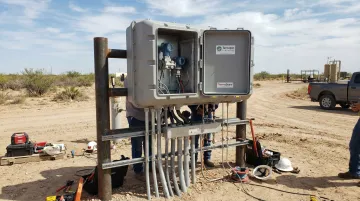
Industrial instrument enclosures are specialized protective housings designed to mount field instruments—such as pressure transmitters, temperature sensors, and flow analyzers—directly in the plant environment. Unlike general electrical enclosures, these housings must accommodate process tubing, wiring bundles, and heat tracing while maintaining ingress protection.
Process plants impose environmental demands that go well beyond standard electrical enclosure requirements:
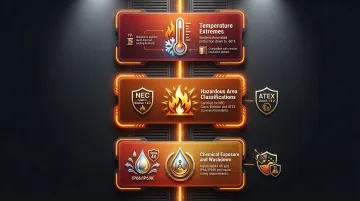
- Temperature extremes require winterization capabilities to prevent freeze damage down to -60°F
- Hazardous area classifications (NEC Class/Division or ATEX zones) mandate explosion-protected designs
- Chemical exposure and washdown requirements drive NEMA/IP rating specifications
These factors determine whether an enclosure can reliably protect instruments where corrosive vapors are continuously present.
The scale of these requirements reflects a large and growing market: the hazardous area equipment segment alone is projected to reach USD 26.60 billion by 2034 at a 6.70% CAGR, according to TechNavio. For outdoor process plant applications, a minimum of IP66 protection (dust-tight and protected against powerful water jets) or NEMA 4X (adding corrosion resistance) is required.
Top 10 Industrial Instrument Enclosure Manufacturers for Process Plants
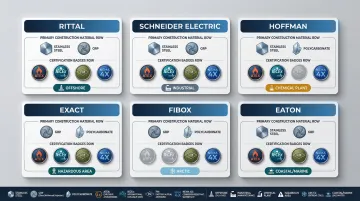
These manufacturers were selected based on process-plant relevance, certification depth, product range, and field-proven performance—not brand size alone.
Terrapin Industrial
Texas-based Terrapin Industrial produces modular, retrofittable instrument enclosures engineered for oil and gas, petrochemical, chemical, and offshore applications. The company developed its patented ThermaGuard design to solve a persistent field problem: traditional rigid enclosures require instruments to be taken offline for installation or replacement, creating schedule breaks and offsite integration delays.
The ThermaGuard system allows enclosures to be installed piecemeal around existing instruments without process interruption. The self-aligning manifold features pre-engineered entries for power wiring, control wiring, and process tubes, enabling complete field installation. The quick-connect pipe stand bracket eliminates extensive mounting hardware and allows enclosure removal while instruments remain operational.
Terrapin's patent-pending heated enclosure liner uses heater cable with a 30-year life expectancy, compared to 5 years for classic finned heaters. This eliminates the single-use thermal fuses that cause traditional heater failures.
The liner maintains internal temperatures above 75°F in -60°F ambient conditions and delivers 108 to 720 watts depending on cable selection. It is rated for T6 hazardous areas, well beyond the T3 (392°F) ceiling of traditional finned and block heaters.
Documented field performance includes:
- Reduces total installation cost by 30%
- Heater installation completed in under 2 minutes (60% faster)
- Eliminates 2–3 week schedule breaks from offsite integration
- Cuts field installation time from 20+ man-hours per transmitter
| Attribute | Details |
|---|---|
| Key Features | Patented modular design; retrofittable without taking instruments offline; quick-connect pipe stand bracket; self-aligning manifold; pre-engineered cable and tube entries |
| Certifications | IP66 (Retrofittable Enclosure), IP65 (Expandable Enclosure); rated for T6 hazardous areas |
| Best Suited For | Oil and gas, petrochemical, chemical manufacturing, offshore, power generation; cold-climate winterization to -60°F/-51.1°C |
nVent Hoffman
A widely recognized leader in industrial enclosures, nVent Hoffman offers an extensive catalog of NEMA- and IP-rated enclosures including stainless steel, carbon steel, and fiberglass instrument housings used across process industries globally. Their Zonex series provides ATEX and IECEx-certified enclosures for hazardous locations in Type 316 stainless steel and GRP (glass-reinforced polyester) options.
Broad product availability and global distribution make Hoffman a default specification for EPC firms and end-users. The Hoffman on Demand program offers pre-modified enclosures and back panels with rapid turnaround, addressing custom requirements without full custom fabrication lead times.
High-temperature silicone gaskets are available for extreme heat applications (-55°C to +180°C). Type 316 stainless steel construction with self-retained cover screws and welded mounting brackets ensures corrosion resistance and installation ease.
| Attribute | Details |
|---|---|
| Key Features | Type 316 stainless steel and GRP construction; high-temperature gasket options; pre-modification program; extensive standard catalog |
| Certifications | ATEX and IECEx certified for Zone 1 and 2; cUL Type 4, 4X, and 12; IEC IP66 rated |
| Best Suited For | Onshore and offshore oil and gas, chemical, petrochemical, and pharmaceutical plants requiring certified hazardous area enclosures |
Rittal
German multinational Rittal produces a wide range of industrial enclosures including stainless steel and polycarbonate options commonly specified in process plants and control rooms. Their AX and KX series offer compact enclosures in stainless steel (AISI 304 and 316L) and plastic (GRP) variants, with the AX Plastic Ex specifically designed for hazardous areas.
Known for modular system design and climate control integration, Rittal's AX plastic Ex enclosures feature double seals with integral rain protection strips and high UV resistance for outdoor durability. Interior installation follows a 25mm pitch pattern allowing flexible mounting of rails and components. The company emphasizes digital workflow support through digital twins and engineering data to streamline specification and modification.
| Attribute | Details |
|---|---|
| Key Features | Modular system design with 25mm pitch pattern; double seal with rain protection; high UV resistance; digital twin integration for engineering |
| Certifications | ATEX and IECEx approvals for Zone 1/2 and 21/22; IP66 (IEC 60529) and NEMA 4X protection |
| Best Suited For | Refineries, drilling platforms, pipelines, and outdoor hazard zones requiring modular, climate-controlled enclosure systems |
Intertec
Intertec specializes in instrument and analyzer enclosures for extreme process plant environments, including heated, cooled, and purged housings used in onshore and offshore oil and gas applications. Their GRP enclosures manufactured from glass-fiber reinforced polyester offer corrosion resistance and thermal insulation superior to metal.
Deep process-plant specialization sets Intertec apart, particularly for climate-controlled solutions. Arctic designs operate in temperatures down to -65°C, while Desert designs handle up to +65°C. GRP material runs approximately 75% lighter than stainless steel, with comparable strength and superior corrosion resistance. Fire shelter cabinets can withstand hydrocarbon fires for up to 120 minutes.
Extensive options for passive cooling, active heating, and purging systems address diverse climate control requirements. Ingress protection ratings extend to IP68 for submersible applications.
| Attribute | Details |
|---|---|
| Key Features | GRP construction 75% lighter than steel; Arctic (-65°C) and Desert (+65°C) designs; fire shelters rated to 120 minutes; extensive climate control options |
| Certifications | IECEx, ATEX, CSA, EACEx, and other international approvals; ingress protection up to IP68 |
| Best Suited For | Arctic oil fields, desert gas plants, offshore platforms, and chemical plants requiring extreme corrosion resistance and thermal management |
R. Stahl
German manufacturer R. Stahl specializes in explosion-protected equipment and enclosures for hazardous areas (Zones 1, 2, 21, 22 and NEC Div. 1/2), widely used in oil refineries, chemical plants, and gas processing facilities. Their Series 8118 junction boxes use glass-fiber reinforced polyester resin, while Series 8146/8150 terminal boxes are available in stainless steel (316L) and GRP.
Their edge is breadth of Ex-rated certification — ATEX, IECEx, FM, and CSA — backed by a long history in hazardous area protection. Certified for Ex e (increased safety) and Ex i (intrinsic safety) applications, R. Stahl enclosures accommodate various terminal configurations, cable glands, and miniature fuses. High-quality gasket materials support a wide ambient temperature range.
| Attribute | Details |
|---|---|
| Key Features | Stainless steel (316L) and GRP construction; Ex e and Ex i protection concepts; flexible terminal configurations; wide ambient temperature range |
| Certifications | ATEX, IECEx, NEC (Class I, II, Div 2), and CEC for Zones 1, 2, 21, and 22; IP66 and NEMA 4X protection |
| Best Suited For | Signal and power distribution in oil and gas, chemical, and pharmaceutical industries requiring explosion protection |
Pepperl+Fuchs
Global specialist in industrial automation and hazardous area technology, Pepperl+Fuchs produces junction boxes and instrument enclosures rated for Zone 1/2 and Division 1/2 hazardous locations. Their GUB series uses copper-free aluminum enclosures, while GUBX series offers stainless steel for higher corrosion resistance.
Their strength is tight integration with process automation systems, backed by deep hazardous area certification coverage. Certified for Ex d (flameproof) and Ex tb (dust ignition protection), the enclosures contain internal explosions to prevent ignition of the surrounding atmosphere. Modular design allows flexible integration of terminals, cable glands, and window options, with operational ratings down to -60°C.
| Attribute | Details |
|---|---|
| Key Features | Flameproof Ex d design; copper-free aluminum or stainless steel construction; modular configuration; operational to -60°C |
| Certifications | Ex d (flameproof) and Ex tb (dust ignition protection); suitable for Zones 1, 2, 21, 22 and Class I/II, Division 1/2; IP66 and NEMA 4X |
| Best Suited For | Offshore, marine, chemical processing, and oil & gas installations requiring flameproof protection in extreme cold environments |
Hammond Manufacturing
Canadian manufacturer Hammond produces steel, stainless steel, and fiberglass NEMA-rated enclosures commonly specified for process plant instrument and junction box applications in North America. Their 1414/1418 series offers NEMA 4 rated steel and stainless steel enclosures, while Eclipse and Eclipse Junior lines provide stainless steel (304 & 316L) enclosures with hinged doors. The PJ/PJU series offers non-metallic (fiberglass/polyester) alternatives.
Known for NEMA 4/4X compliance, product variety, and domestic manufacturing, Hammond maintains extensive inventory of standard sizes for rapid shipment. Type 4X stainless steel options provide protection against corrosion, washdowns, and outdoor weathering. Continuous hinges and stainless steel clamps or quarter-turn latches ensure secure sealing.
| Attribute | Details |
|---|---|
| Key Features | Extensive standard size inventory; stainless steel 304/316L options; continuous hinges; rapid shipment availability |
| Certifications | NEMA Type 4 and 4X listed; UL and CSA approved; IP66 ratings for many series |
| Best Suited For | Water treatment, oil & gas, mining, and food & beverage industries in North America requiring NEMA-compliant enclosures |
Fibox
Finnish manufacturer Fibox produces polycarbonate, ABS, and aluminum enclosures including IP 65/66/67-rated models used in process instrumentation applications where non-metallic materials offer advantages in corrosive or coastal environments. Their ARCA series polycarbonate cabinets provide a cost-effective alternative to stainless steel, while MNX series enclosures serve harsh environments.
Corrosion-resistant non-metallic construction, broad IP-rating coverage, and lightweight design are Fibox's primary advantages. ARCA series enclosures achieve an IK10 impact rating, on par with metal. Polycarbonate construction is rust-free, UV-resistant, and transparent to radio waves (Wi-Fi friendly). Formed-in-place PUR gaskets and double-corner mounting provide stability, at a fraction of the weight of steel or fiberglass.
| Attribute | Details |
|---|---|
| Key Features | Polycarbonate construction; IK10 impact rating; rust-free and UV-resistant; Wi-Fi transparency; lightweight design |
| Certifications | NEMA 4X and 6P; IP66/67 rated |
| Best Suited For | Coastal, marine, and chemical environments where corrosion is a primary concern and lightweight installation is advantageous |
Phoenix Contact
Phoenix Contact leverages its expertise in connectivity to offer enclosures often pre-integrated with terminal blocks and interface technology. Their CLIPSAFE stainless steel and polyester (GRP) empty enclosures and junction boxes serve process technology applications, while FB series stainless steel field junction boxes specifically target fieldbus applications.
System integration with process wiring infrastructure is where Phoenix Contact pulls ahead. Enclosures can be supplied pre-assembled with Ex-approved terminal blocks, cable glands, and other components. AISI 316L stainless steel (up to 2mm thick) or robust polyester construction handles extreme conditions. Dedicated designs for field device couplers and trunk line modules support decentralized signal distribution.
| Attribute | Details |
|---|---|
| Key Features | Pre-assembled with Ex-approved terminals and glands; AISI 316L stainless steel up to 2mm thick; fieldbus-ready designs; system integration capability |
| Certifications | ATEX and IECEx approvals for Ex areas; IP66 and NEMA 4X |
| Best Suited For | Process technology, chemical parks, and pipelines requiring decentralized signal distribution with integrated connectivity |
Spelsberg
German manufacturer Spelsberg offers robust IP 65/66/67-rated enclosures in stainless steel, GRP, and polycarbonate with growing presence in North American process and industrial applications. Their TK series features glass-fiber reinforced polycarbonate enclosures, while AK series provides distribution boards and enclosures.
Strong IP protection ratings across a wide material range — stainless steel, GRP, and polycarbonate — give Spelsberg flexibility for varied site requirements. TK series enclosures are UV-resistant, halogen-free, and IK08 impact-rated. Available with or without metric knockouts, they include diverse mounting accessories like mast fixing sets. DNV certification validates suitability for ships and offshore installations.
| Attribute | Details |
|---|---|
| Key Features | Glass-fiber reinforced polycarbonate; UV-resistant and halogen-free; IK08 impact resistance; DNV maritime/offshore certification |
| Certifications | IP66 (TK Series) and NEMA 4X/12K; UL (UL 50/50E), CSA, DNV (Maritime/Offshore), and DLG (Ammonia resistance) |
| Best Suited For | Protected outdoor areas, industrial environments, agricultural/ammonia-rich settings, and marine/offshore installations |
How We Chose the Best Industrial Instrument Enclosure Manufacturers
The evaluation focused on factors most critical for process plant procurement: IP/NEMA protection rating appropriateness, hazardous area certification (ATEX, IECEx, FM, CSA, NEC), material suitability for corrosive and extreme temperature environments, and availability of heated or climate-controlled options for winterization.
We also weighted installation and maintenance practicality heavily — specifically, ease of enclosure replacement without instrument shutdown, modular or staged installation capability, and total installed cost (not just unit price). These decisions directly affect plant uptime and project schedules in ways that unit pricing alone never reveals.
Key selection criteria:
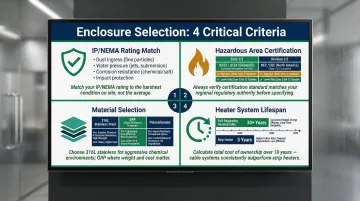
- Match IP/NEMA rating to specific environmental threats (dust, water jets, submersion, corrosion)
- Verify ATEX/IECEx/NEC certifications against zone classification — Zone 1 vs. 2, Div 1 vs. 2
- Choose 316L stainless steel for chemical and corrosion resistance in harsh environments; GRP/polycarbonate where thermal insulation matters
- Prioritize heater cable systems over strip heaters — service life runs 30 years versus roughly 5
A common procurement mistake: selecting a manufacturer based on catalog availability or lowest unit cost without evaluating field installation complexity, heater service life, or whether replacement requires taking instruments offline. These hidden variables drive lifecycle costs far beyond the purchase price. Total Installed Cost (TIC) covers:
- Purchase price and engineering time
- Installation labor and field complexity
- Ongoing maintenance (painting, rust removal, component replacement)
- Downtime risk when instruments must go offline for enclosure work
Conclusion
Instrument enclosure selection in process plants is a lifecycle decision — one that extends well beyond product price. The right manufacturer balances:
- Environmental protection ratings suited to your site conditions
- Hazardous area compliance (ATEX, NEC, IECEx)
- Thermal management for extreme ambient temperatures
- Installation practicality that minimizes downtime and field labor
Procurement and engineering teams should evaluate total installed cost. Prioritize manufacturers whose designs reduce installation time, maintenance burden, and instrument downtime during enclosure replacement.
If eliminating instrument downtime during enclosure installation or replacement is a priority, Terrapin Industrial's patented ThermaGuard system is built around exactly that problem. Call (281)-615-1429 to discuss your application.
Frequently Asked Questions
What is an industrial instrument enclosure used for in process plants?
Industrial instrument enclosures protect field instruments (transmitters, sensors, analyzers) from environmental hazards including temperature extremes, moisture, dust, and chemical exposure. In process plants, they also provide heat tracing to prevent freeze damage to sensitive instrumentation and process tubing.
What NEMA or IP rating should an instrument enclosure have for outdoor process plant use?
Outdoor process plant applications typically require a minimum of NEMA 4X or IP66 for dust-tight and water-jet protection. Corrosion-resistant materials (stainless steel 316L or GRP) are essential for chemical or coastal environments where exposure to corrosive atmospheres is continuous.
What does a "retrofittable" instrument enclosure mean?
A retrofittable enclosure installs around an existing in-service instrument without taking it offline. This eliminates the production interruptions and schedule delays that come with traditional rigid enclosure replacement, which requires instruments to be shut down and removed.
How long do instrument enclosure heaters typically last?
Traditional finned and block-style heaters typically have a 5-year service life due to single-use thermal fuses that cannot be reset. Modern heater cable solutions (such as those used in Terrapin's ThermaGuard liner) are rated for up to 30 years, cutting maintenance frequency and replacement costs considerably.
What hazardous area certifications should I look for in an instrument enclosure manufacturer?
For North American process plants, FM and CSA approvals plus NEC Class/Division ratings are standard. Globally, ATEX and IECEx certifications apply. The enclosure's T-class rating must be compatible with the area's temperature classification (e.g., T6 for the most restrictive environments where gases ignite at low temperatures).
What is the difference between a heated instrument enclosure and a standard weatherproof enclosure?
A standard weatherproof enclosure keeps out dust and water — nothing more. A heated instrument enclosure adds a heater (cable, finned, or block-style) to maintain internal temperatures above instrument operating minimums in cold climates, which is critical for winterization where ambient temperatures drop below -20°F/-29°C.